
 English (English)
 Dansk (Danish)
 Deutsch (German)
 Deutsch (German)
 Español (Spanish)
 Français (French)
 Français (French)
 Italiano (Italian)
 Nederlands (Dutch)
 Bokmål (Norwegian)
 Svenska (Swedish)
Traps and lures for Asian hornets and wasps
This is the specialist category for traps and lures for Asian hornets and wasps. The Asian hornet is an invasive species that can harm native biodiversity and disrupt the ecosystem. Fortunately, we offer a wide range of effective products to help you monitor and control these insects. Read on to discover how our traps and lures can help you tackle the challenges posed by Asian hornets.
Monitoring and managing Asian hornets is crucial to reduce their spread and impact. Effective traps and lures play an essential role in locating and capturing this invasive species. At Imkershop, we understand this importance and offer high-quality products designed to attract and catch Asian hornets effectively.
Lures: Our lures are specially formulated to increase attraction for Asian hornets. They contain scents that draw in the insects. By placing these lures strategically, you increase the chance of a successful catch.
Traps: Our traps are designed to safely capture Asian hornets while minimizing non-target insects. We offer various types of traps, such as trap cups and more advanced traps that are easy to use and durable. Our traps are effective, environmentally friendly, and ensure efficient control of Asian hornets.
-
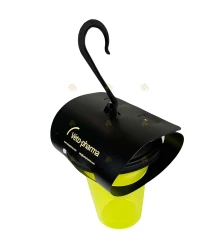
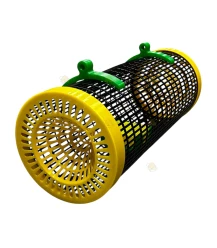
Asian hornet & wasp trap (VespaCatch)
€ 5,95 In stock and available for immediate delivery.The trap for the Asian hornet (Vespacatch) is designed to naturally attract hornets thanks to the yellow color of the container. Hornets stay trapped in the device for a long time. This protects your beehive. Also suitable for wasps! Tip: check the trap regularly for insects you wish to release. The Asian hornet trap (Vespacatch) consists of the...View more -
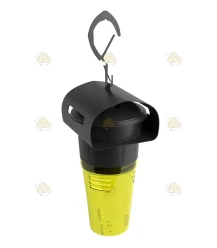
Selective Asian hornet & wasp trap (VespaCatch Select)
€ 18,95 In StockDiscover the VespaCatch SELECT, the selective Asian hornet and wasp trap. This trap is a highly effective control solution against Asian hornets and wasps. This innovative trap specifically targets the Asian hornets [product id=5389]Vespa Velutina[/product] and the Vespa Orientalis, and protects your bees while other beneficial insects are spared thanks...View more -
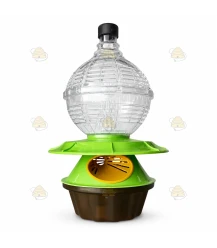
Asian hornet trap Deluxe
€ 47,95 In StockFight smart, save even smarter! Choose from the following options: Option 1 consisting of:- Asian hornet trap Deluxe (pre-sale) Option 2 consisting of option 1 + :- Funnel, guard for the yellow entrances of the Asian hornet trap Deluxe ([product id=6234]art. 8994[/product]) Option 3 consisting of option 1 + :- Selective trap, 8.5 mm caps for the...View more -
Asian hornet trap Velutina Trap hanging/standing
€ 49,95 In StockHanging Asian hornet trap to control the invasive alien species Vespa velutina. A robust, well-made trap that works excellently for the Asian hornet. If you want to be even more selective, we also sell caps to minimise European hornets entering the trap. In spring [product id=6254]8.5 mm caps[/product] for queens, and in autumn [product id=6258]8 mm...View more -
Trappit attractant for wasps and Asian hornets (1L)
€ 26,95 In StockEffectively lure wasps and Asian hornets with the Trappit attractant! The special formula attracts these nuisance insects and delivers fast, effective control. Easy to use: simply pour the attractant into a trap and the wasps and hornets will be drawn to it. Protect your bees from nuisance with Trappit attractant! The bottle contains 1 litre of...View more -
Trappit lure for wasps and Asian hornets (5L Jerrycan)
€ 114,95 In StockEffectively lure wasps and Asian hornets with our Trappit lure! Our special formula attracts these troublesome insects and provides fast, effective control. Easy to use: simply place the lure in a trap and the wasps and hornets will be drawn to it. Protect your bees from nuisance with Trappit lure! The jerrycan contains 5 liters of lure and comes with a...View more -
VespaCatch hornet & wasp trap with 30 ml Trappit
€ 7,90 In StockThe Asian hornet trap (Vespacatch) is designed to naturally attract hornets, thanks to the yellow color of the container. Hornets remain confined in the trap for a long time. This helps protect your hive. Also suitable for wasps! The Asian hornet trap (Vespacatch) consists of the following parts:- A robust yellow plastic container that is...View more -
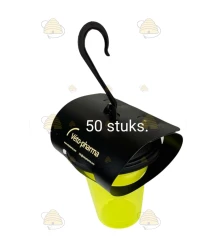
Asian hornet & wasp trap, box of 50 pieces (Vespacatch)
€ 239,95 In StockBox of 50 Asian hornet traps (VespaCatch). This trap is designed to create a natural attraction for hornets. This is due to the yellow color of the container. Hornets remain confined in the trap for a long time. This protects your beehive. Also suitable for wasps! The Asian hornet trap (VespaCatch) consists of the following parts:- A robust yellow...View more -
Asian hornet control starter kit
€ 42,95 In StockWith this starter kit you protect your bees against harmful Asian hornets without bycatch of bees and other insects. The VespaCatch Select makes this possible thanks to the adjustable exit hole, keeping ecosystem impact to a minimum. And with the 1-liter Trappit pack you can protect your bees for a long time. This starter kit contains: [product...View more -
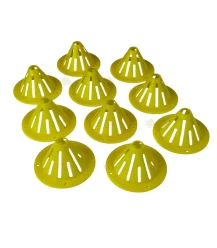
Yellow cones for Asian hornet trap 10 pieces
€ 7,95 In StockThese yellow cones for Asian hornet traps, sold in a set of 10, are intended for making a selective trap for the Asian hornet. Ideal for making your own traps or creating a trap with multiple entrances. To catch the Asian hornet queen, the holes in the cones should be enlarged to 8.5 mm. Asian hornet queens can pass through an 8.5 mm opening, but...View more -
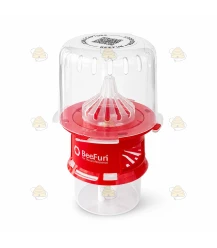
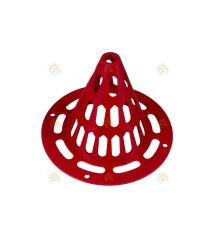
Selective hornet cone large - BeeFun®
€ 7,95 In StockLarge hornet entrance cone made of high-quality plastic, supplied in red or yellow, to make your own hornet trap. This hornet entrance cone (outer diameter 9.6 cm / inner diameter 6 cm) is ready to be mounted in a bottle/bucket/box and requires no further adjustment. Add [page controller="search" search_query="lokmiddel"]hornet attractant[/page] to the...View more -
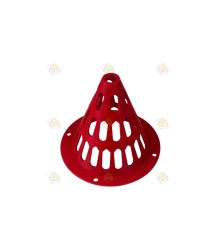
Selective hornet cone small - BeeFun®
€ 6,95 In StockSmall yellow or red hornet entrance cone made of high-quality plastic to build your own hornet trap. This entrance for hornets (outer diameter 8 cm/inner 6 cm) can be mounted in a bottle, bucket or box. Add some lure to the bottle, bucket or box in which you mount this entrance. Want to use the cone for catching queens in spring, the so-called spring...View more -
Selective front panel 13,5x13,5 cm with cone for Asian hornet
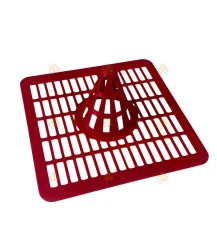
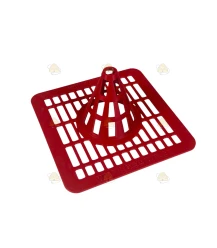
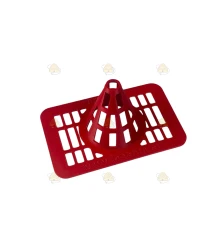
€ 11,15 In StockThis front panel, dimensions 13.5 x 13.5 cm, fitted with a 5 cm high cone, is intended for beekeepers making their own hornet trap. The hornet can fly in through the cone, but then cannot get back out.View more -
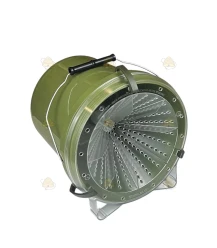
Hornet trap with bucket - BeeFun®
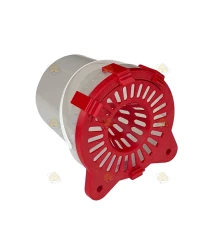
€ 19,95 In StockAttractive trap supplied in bright green with yellow entrance or in red, including bucket. Thanks to the protruding legs, you can use this hornet trap perfectly horizontally. Supplied with clips to attach the entrance to the bucket after filling with [page controller="search" search_query="lokmiddel"]hornet lure[/page]. The bucket measures about 13 cm...View more -
-
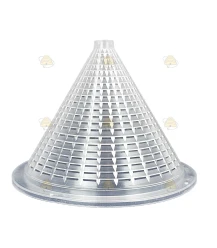
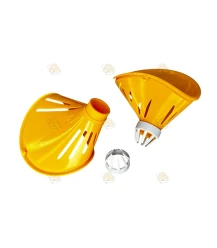
Cone for Asian hornet trap
€ 4,99 In StockThe diameter of this funnel for capturing Asian hornets is 23 cm and the height is 17cm. With this funnel you can catch both queens and workers of the Asian hornet. The opening diameter is 1.6 cm, small enough to keep the hornet in the trap. Tip: [product id=5389]educational model Asian hornet[/product] and/or Information card [product id=5510]Asian...View more -
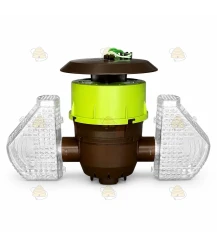
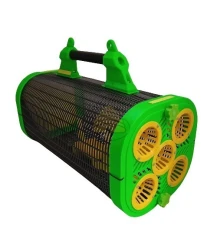
Asian hornet trap advanced 6 entrances - BeeFun®
€ 149,95 In StockBeeFun® advanced Asian hornet trap with no fewer than 6 entrances and a reservoir for Asian hornet lure. Asian hornets can enter the trap through 1 large entrance and 5 small ones with a special color that attracts Asian hornets. Inside the trap is a reservoir into which you can pour the lure. Above this reservoir is a transparent cover that keeps...View more -
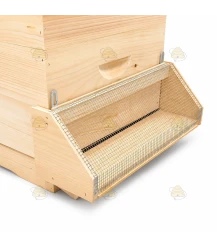
Hornet Protector Premium Pine BeeFun®
€ 44,95 In StockNeed protection against hornets? With this BeeFun® hornet guard, you ensure no hornets can fly into the beehive. The guard is designed for the Spaarkast and is made from high-quality pine with sturdy galvanized mesh. Bees can pass through the mesh openings, the Asian hornet cannot. The guard is 46 cm wide, about 15 cm high and about 15 cm deep. Mesh size...View more -
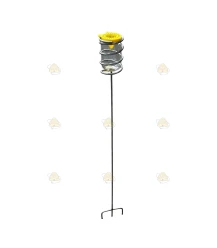
Stainless steel stand/holder for hornet trap or bait jar
€ 29,95 In StockStainless steel stand / holder for the glass jar hornet trap, horizontal & vertical. The stand is also very handy for placing lure jars to locate nests of the Asian hornet. Simply push this holder into the ground and place the glass jar of the hornet trap in the spiral section. The lure jar / wick jar will then be at the ideal height for catching...View more -
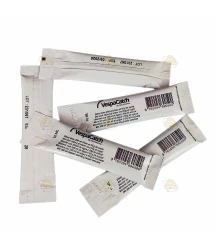
VespaCatch lure for wasps and Asian hornets (5x 10 ml sachets)
€ 6,45 Out of stockOut of stockVespaCatch liquid attractant in a convenient 10 ml sachet (5 pieces) is a plant-based attractant specifically designed not to attract bees, maximizing the trapping of Asian hornets. It is supplied as 5 sachets. Due to regulations, this product can no longer be delivered in Belgium. Please order [product id=5108]Trappit in bottle[/product] or in [product...View more -
Trappit mini bottle attractant for wasps and Asian hornets (± 30 ml)
€ 1,99 Out of stockOut of stockSmall bottle of approximately 30 ml of Trappit lure for Asian hornets and wasps. Ideal if you only have 1 small trap or want to test Trappit as a lure. Of course, this is also a handy amount to hand out when distributing the selective traps. Trappit is best kept cool; if you store it below 15°C the product retains its activity and attractiveness for at...View more -
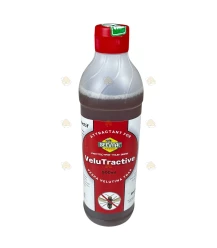
VeluTractive 500 ml
€ 13,95 In Stock500 ml VeluTractive lure to add to a hornet trap as needed. Made from natural, fermented sweet extracts from plants. Simply add the activator sachet to the bottle, give it a shake, and pour into the hornet trap. Benefits: 100% natural, based on fermented plant extracts. Strongly attracts wasps and hornets. Also attracts other insects; this activity...View more -
Asian hornet protection STOP IT MAX®
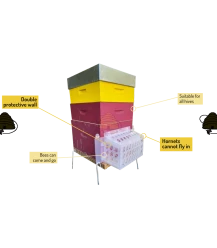
€ 29,95 In StockProtect your bees with the Asian hornet trap STOP IT MAX!® As this hornet moves into our area, it’s essential to safeguard your bees. With dual protective screens, this trap lets bees fly freely while stopping hornets. Fits all beehives. Instructions: To assemble the STOP IT MAX® and mount it on the hive, watch this video: Stop It Max assembly video -...View more -
VeluTractive 5 L
€ 64,95 In Stock5 liter VeluTractive lure for use in a hornet trap as needed. Produced from natural, fermented plant-based sweet extracts. Simply add the activator sachet to the bottle, shake briefly, and pour into the hornet trap. Benefits: 100% natural, made from fermented plant extracts. Strongly attracts wasps and hornets. Also draws other insects; this...View more -
VespaCatch attractant for wasps and Asian hornets (100x 10 ml sachets)
€ 92,95 Out of stockOut of stockVespaCatch lure in a convenient 10 ml sachet (100 pcs - 1 box) is a plant-based attractant specifically designed not to attract bees, maximizing the capture of Asian hornets. It comes in a box with 100 sachets. Due to regulations, this product can no longer be delivered in Belgium. Please order [product id=5108]Trappit in bottle[/product] or in [product...View more -
VespaCatch attractant for wasps and Asian hornets (1L = 100 doses)
€ 43,95 Out of stockOut of stockVespaCatch lure liquid in a handy 1-liter jerrycan is a plant-based attractant specifically designed not to attract bees, maximizing the capture of Asian hornets. It comes in a 1L can with a measuring cup integrated into the cap. Due to regulations, this product can no longer be delivered in Belgium. Please order [product id=5108]Trappit in...View more -
Hornet robbing guard
€ 10,25 In stock and available for immediate delivery.By installing this entrance protector in front of the hive, you can prevent robbing and hornets from entering the colony. The strip can be screwed to the front of the hive or clamped in place with a strap. The length is 41.5 cm, the height is 3 cm and the width is 8.5 cm. It can be helpful to slightly widen the landing board (or mount a slightly wider...View more -
Belgian hornet trap 8 entrances
€ 43,95 In StockThis Belgian hornet trap is specially designed and developed as a selective trap for the Asian hornet. The model features eight conical inlets, six of which are located in the queen excluder and one at each end. All inlets have a diameter of approximately 8 mm. Thanks to these dimensions, the European hornet, which is larger than the Asian hornet, cannot...View more -
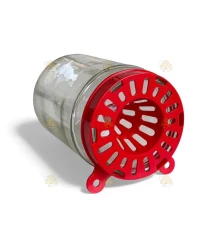
Hornet Trap Large Kit (Red)
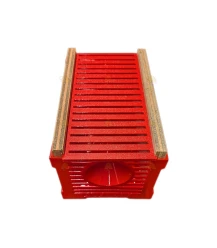
€ 49,95 In StockLarge hornet trap kit. This kit is easy to assemble and features a total of 6 entrances to catch hornets. Place this trap near your apiary with a lure. The top of the trap is made from solid plastic, ensuring the lure won’t wash away when it rains. Hornets can fly into the trap but then cannot get back out. The trap is bright red, which attracts hornets.View more -
Metal mesh with cone for hornet trap
€ 36,95 In StockWith this trap grid you can catch Asian hornets in a brood box (brood chamber) of a Langstroth hive, or in another hive. The grid measures 42 x 50 cm (width x length) and has a depth of 17 cm. You mount this grid on top of the hive, closing off the bottom of the box. This creates a very sturdy, high-capacity trap. You can also build your own box, of course.View more -
Information card & leaflet Asian hornet (Vespa velutina)
€ 0,59 In StockThis informative card features, on one side, a concise overview of the Asian hornet (Vespa velutina), an invasive species increasingly found in our region. Clear illustrations highlight the key identification features of this hornet, such as its size and colour. The life cycle of the Asian hornet, from the queen's emergence in spring to the formation of...View more -
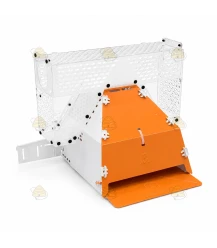
Asian hornet trap 2 entrances large - BeeFun®
€ 54,95 Out of stockOut of stockLarge BeeFun® advanced Asian hornet trap with 2 entrances and a reservoir for Asian hornet lure. The Asian hornets can enter the trap through two large, specially colored entrances that attract Asian hornets. Inside the trap is a reservoir where you can pour the lure. This reservoir is secured with a clamp you can use to hang/attach the trap. Dimensions:...View more -
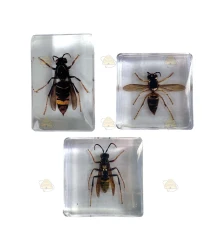
Set of 3 Educational Models
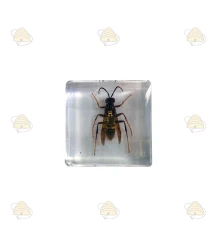
€ 27,95 In StockLearn to identify the Asian hornet with this detailed educational set. This set includes three precisely prepared specimens, including the Asian hornet, each carefully embedded in clear resin. This makes all the details of these impressive insects visible. This set is ideal for educational purposes and for anyone fascinated by nature. 1. Asian Hornet...View more -
Educational model Asian hornet (Vespa velutina) BeeFun®
€ 15,95 In StockView and study the Asian hornet in razor-sharp detail. The Asian hornet is an invasive species that is colonizing Europe via France. The hornet is carefully embedded in clear resin, making all details of this impressive insect visible. The dimensions of the resin block are approximately 4.5 x 3 x 2 cm. Due to natural processes, the colors may become more...View more -
Educational model Black shield hornet, (Vespa bicolor)
€ 15,95 In StockView and study the black shield wasp in razor-sharp detail. The wasp is carefully embedded in clear resin, making every detail of this impressive insect visible. The resin block measures approximately 4 x 4 x 1.5 cm. The Vespa bicolor, also known as the black shield wasp, is a hornet species described in 1787 by Johan Christian Fabricius. This wasp has...View more -
Educational model Paper wasp, (Polistes rothneyi)
€ 15,95 In StockView and study the paper wasp in razor-sharp detail. The wasp is carefully embedded in clear resin, making all the details of this impressive insect visible. The resin block measures approximately 4 x 4 x 1.8 cm. Polistes rothneyi is a species of social wasp in the family Vespidae, belonging to the subgenus Gyrostoma. It is known as the largest...View more -
HiveGate - Hornet and robbing guard
€ 16,95 Out of stockOut of stockHiveGate is an advanced entrance reducer that protects bees against robbing by other bees, as well as wasps and hornets. This innovative solution is designed to support the colony’s natural defense mechanisms. The main benefits of HiveGate are: Protection against predators: HiveGate protects your bees from wasps, robbing bees, and the Asian hornet...View more -
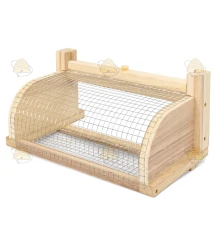
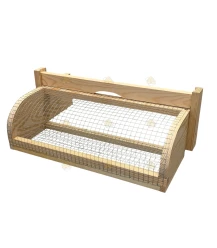
Wooden anti-hornet cage for Simplex BE hives
€ 23,95 Out of stockOut of stockPractical protective cage against hornets, specially made for Belgian simplex beehives. This protective cage is made of wood with sturdy mesh that bees can fly through, but hornets cannot. The protective cage has an external width of 50.7 cm, and the internal dimensions that fit over the landing board and hive entrance are 46.5 cm wide and 10.7 cm high....View more -
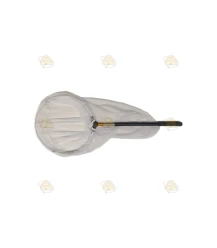
Scoop net for hornets - large
€ 22,95 In StockFoldable, telescopic net for catching Asian hornets. For catching, radio-tagging or marking the hornets. The net diameter is approximately 27.5 cm with a depth of 55 cm, so the net can be inverted to enclose the hornet. Extended, the net is about 1.5 m long. The net color is white or black depending on availability.View more -
Small hornet trap assembly kit (red)
€ 39,95 Out of stockOut of stockSmall red hornet trap as a kit. This kit is easy to assemble and has a total of 2 entrances to trap hornets. Place this trap, with a lure, near your apiary. Add hornet lure to the trap. The top of the trap is made of solid plastic, which prevents the lure from washing away when it rains. Hornets can fly into the trap but cannot get back out. The trap is...View more -
Wasp trap for mounting on an empty bottle
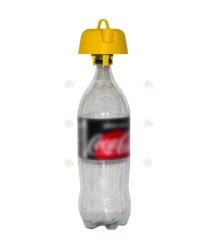
€ 4,60 In stock and available for immediate delivery.If your bee colony or you are being bothered by wasps, this is the ideal solution. This high-quality plastic trap is designed to fit onto a PET bottle. For best results, place the trap in the sun and out of the wind. To catch the wasps, pour a shallow layer of alcoholic drink into the trap. The wasps will be attracted to it and will eventually drown.View more -
Easy Wasp Trap
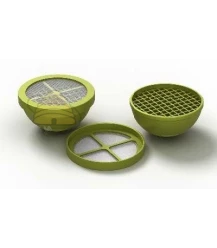
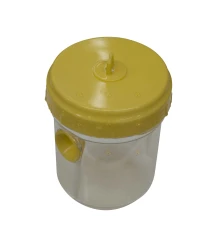
€ 7,20 In stock and available for immediate delivery.Transparent wasp trap with a yellow lid, made of durable plastic. Pour a small amount of syrup into the trap and screw on the lid, or use any other attractant. Wasps enter the trap through the small openings. The openings are designed so that once a wasp is inside, it can no longer get out. You can set this trap down or hang it from, for example, a tree....View more -
Reusable Small Hive Beetle Trap
€ 2,65 In stock and available for immediate delivery.This small trap for the small hive beetle (Aethina tumida) is made of rigid plastic and is a compact, handy tool to monitor the colony for small hive beetle and to trap it. This trap is made of rigid plastic, making it ideal for repeated use. The small hive beetle is a threat to European honey bee colonies, as just a few beetles can quickly ruin an entire...View more -
Simple small hive beetle trap
€ 2,10 In stock and available for immediate delivery.This small trap for the small hive beetle (Aethina tumida) is a compact, handy tool to monitor the bee colony for small hive beetles and to catch them. The small hive beetle is a threat to European bee colonies, as just a few beetles can quickly ruin an entire colony. This small hive beetle trap is designed for single use, but can be reused after...View more -
Metal Woodpecker with Red Crest for Beehive Protection
€ 23,05 In StockA black-painted metal woodpecker with a striking red crest is designed to effectively keep woodpeckers away from your beehives. Beautiful finish thanks to laser cutting gives this metal woodpecker a realistic look that deters other woodpeckers. Easy to mount in a tree or at the apiary; pre-drilling is recommended for mounting. For long-lasting use, hang...View more -
Funnel guard for yellow entrances Asian hornet trap Deluxe
€ 3,95 In StockFunnel guards that you can attach to the yellow entrance ports. This makes the trap selective so only Asian hornets can enter the trap. When you order this product you receive two funnel guards, designed for the Asian hornet trap Deluxe (#8997). The yellow entrance ports shown in the image are included with the hornet trap and are not supplied when you...View more -
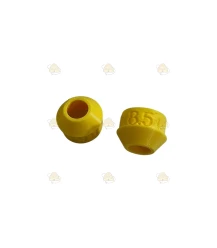
Selective trap caps 8.5 mm for yellow entrances Asian hornet trap Deluxe
€ 2,95 In StockSelective caps that you can attach to the yellow entrances of the Asian hornet trap Deluxe ([product id=6237]#8997[/product]). These caps have an aperture of 8.5 mm. This makes the trap selective: Asian hornet queens can enter, while it is virtually impossible for European hornet queens. Of course, smaller insects can still enter the trap, but they can...View more -
Selective trap caps 8.5 mm for green entrances Asian hornet trap Velutina Trap
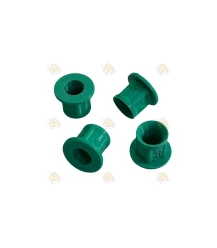
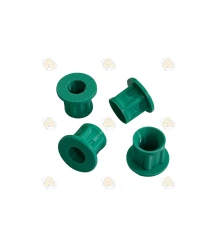
€ 4,95 In StockSelective caps that you can attach to the green entrances of the Asian hornet hornet trap Velutina Trap ([product id=5798]#8563[/product]). This makes the trap selective so only Asian hornets can enter, and not or hardly European hornets. Of course, smaller insects can still enter the trap, but they can get out again! Set of 4 pieces. When ordering this...View more -
Extra butterfly guard for the globe of the Asian hornet trap Deluxe
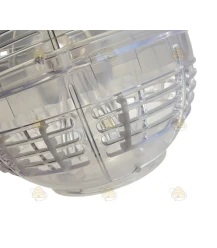
€ 4,95 In StockSet of small tabs that can be clipped to the inside of the globe. This ensures the trap will let virtually no butterflies in. This can happen occasionally, and of course it’s a shame for these beautiful native insects. The set includes: 18 tabs for the inside of the globe (+ 1 spare free) 2 blocks for the slot in the bottom of the globe This saves...View more -
Selective trap plugs 8 mm for yellow entrances Asian hornet trap Deluxe
€ 2,95 In StockSelective caps that you can attach to the yellow entrances for the Asian hornet trap Deluxe ([product id=6237]#8997[/product]). This makes the trap selective: Asian hornet workers can enter the trap, but it becomes virtually impossible for European hornet workers. Of course, smaller insects can still enter, but they can exit again via the top of the trap!...View more -
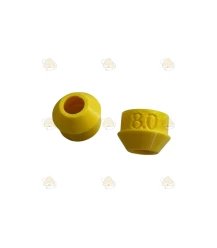
Selective trap caps 8 mm for green entrances Asian hornet trap Velutina Trap
€ 4,95 In StockSelective entrance caps that you can attach to the green entrances for the Asian hornet trap Velutina Trap ([product id=5798]#8563[/product]). This makes the trap selective so only Asian hornet workers can enter, and not—or hardly ever—the European hornet workers. Of course, smaller insects can still enter the trap, but they can get back out! Set of 4....View more -
Selective trap plugs 8.1 mm for green entrances Asian hornet trap Velutina Trap
€ 4,95 In StockSelective entrance plugs with an aperture of 8.1 mm that you can attach to the green entrances of the Asian hornet trap Velutina Trap ([product id=5798]#8563[/product]). This makes the trap selective and allows only Asian hornets to enter, while preventing, or largely preventing, European hornets. Smaller insects can still enter the trap, but they can get...View more -
Selective trap caps 8.2 mm for green entrances Asian hornet trap Velutina Trap
€ 4,95 In StockSelective entrance plugs with an 8.2 mm opening that you can attach to the green entrances of the Asian hornet trap Velutina Trap ([product id=5798]#8563[/product]). This makes the trap selective so only Asian hornets can enter, and European hornets hardly, if at all. Of course, smaller insects can still enter the trap, but they can get back out! Set of 4...View more -
Selective trap plugs 8.3 mm for green entrances Asian hornet trap Velutina Trap
€ 4,95 In StockSelective entrance caps with an 8.3 mm aperture that you can attach to the green entrances on the Asian hornet trap Velutina Trap ([product id=5798]#8563[/product]). This makes the trap selective so only Asian hornets can enter, while European hornets do not or only very rarely. Of course, smaller insects can still enter the trap, but they can get back...View more -
Selective trap caps 8.4 mm for green entrances Asian hornet trap Velutina Trap
€ 4,95 In StockSelective entrance caps with an 8.4 mm aperture that attach to the green entrances of the Asian hornet trap Velutina Trap ([product id=5798]#8563[/product]). This makes the trap selective so only Asian hornets can enter, while European hornets cannot or only rarely. Smaller insects can still get into the trap, but they can get back out! Set of 4. When...View more -
Selective trap caps 8.1 mm for yellow entrances Asian hornet trap Deluxe
€ 2,95 In StockSelective caps that you can attach to the yellow entrances for the Asian hornet trap Deluxe ([product id=6237]#8997[/product]). These caps have an opening size of 8.1 mm. This makes the trap selective and allows Asian hornet queens to enter, while it becomes virtually impossible for European hornet queens. Of course, smaller insects can still enter the...View more -
Selective plugs 8.2 mm for yellow entrances Asian hornet trap Deluxe
€ 2,95 In StockSelective entrance caps that you can attach to the yellow entrance ports of the Asian hornet trap Deluxe ([product id=6237]#8997[/product]). These caps have an aperture of 8.2 mm. This makes the trap selective: Asian hornet queens can enter, while it becomes virtually impossible for European hornet queens. Smaller insects can still enter the trap, but...View more -
Selective trap plugs 8.3 mm for yellow entrances Asian hornet trap Deluxe
€ 2,95 In StockSelective entrance caps that you can attach to the yellow entrances of the Asian hornet trap Deluxe ([product id=6237]#8997[/product]). These caps have an 8.3 mm aperture. This makes the trap selective: Asian hornet queens can enter the trap, while it is virtually impossible for European hornet queens. Naturally, smaller insects can still enter the trap,...View more -
Selective entrance plugs 8.4 mm for yellow entrances Asian hornet trap Deluxe
€ 2,95 In StockSelective caps that you can attach to the yellow entrance ports of the Asian hornet trap Deluxe ([product id=6237]#8997[/product]). These caps have an aperture size of 8.4 mm. This makes the trap selective: Asian hornet queens can enter the trap, while it is virtually impossible for European hornet queens. Smaller insects can still enter, but they can...View more -
Starterset Aziatische hoornaar: 2 vallen met potten en Trappit 500 ml
€ 24,95 € 27,52 In StockReduced price!View more -
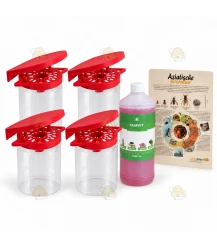
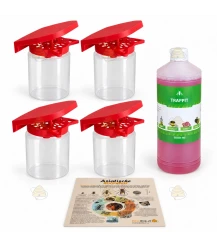
Aziatische hoornaarvallenset: 4 vallen met potten en Trappit 1 liter
€ 44,95 € 51,50 In StockReduced price!View more -
Buurtset Aziatische hoornaar: 10 vallen met potten en Trappit 1 liter
€ 69,95 € 87,44 In StockReduced price!View more -
Trappit navulset voor Aziatische hoornaars en wespen: 2 x 1 liter
€ 47,95 € 53,90 In StockReduced price!View more -
Voorjaarsset Aziatische hoornaar: 4 koninginnenvallen met dakjes en Trappit 1 L
€ 59,95 € 69,50 In StockReduced price!View more -
Najaarsset Aziatische hoornaar: 4 werkstervallen met dakjes en Trappit 1 L
€ 59,95 € 69,50 In StockReduced price!View more -
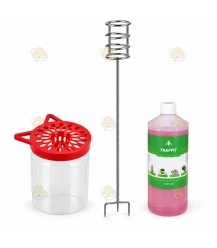
Aziatische hoornaarset: 8 mm werksterval, RVS houder en Trappit 1 liter
€ 54,95 € 63,39 In StockReduced price!View more -
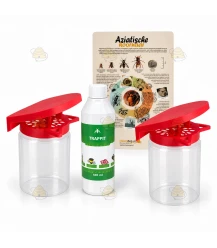
Tuinset Aziatische hoornaar: 2 werkstervallen met dakjes en Trappit 500 ml
€ 32,95 € 36,52 In StockReduced price!View more




Showing 1 - 76 of 76 items
What are Asian hornets and why are they dangerous?
Asian hornets are an invasive species. They are dangerous for two reasons: they are highly territorial, which means that if you approach or disturb a nest they will attack in large numbers. These attacks can cause severe injury or even death. Fortunately this is rare, but it does happen. In addition, they threaten biodiversity. They are opportunistic predators that eat almost anything they encounter. As beekeepers we see hornets around the hive and report them, but it’s not the case that they only plunder bee colonies and then eat all the bees. It has been shown that when a hornet nest is, for example, in a nature reserve, they consume the animals and insects living there; near a cattle farm they prey much more on flies; and in open fields they target solitary bees.
How do you control the Asian hornet?
The best way to control the Asian hornet is to trap the queens in early spring—usually from April to May in the Netherlands; in southern countries this can be as early as March. If you catch the queen, the colony is doomed. Once queens stop flying, you can only locate the nests and have them destroyed.
Which products can you use for this?
For trapping queens, it’s best to use selective traps. These allow all smaller insects to escape, and only the hornet queens remain trapped. Any larger animals, such as big moths or European hornet queens, can be released.
How do the traps work?
Place a lure in the trap, for example Trappit or Vespacatch attractant. This attracts Asian hornet queens or the hornets themselves. Asian hornet traps are very simple: via a funnel entrance the hornets fly in but cannot get back out. They are drawn in by the lure.
How do you install or place Asian hornet traps?
Install traps around the house or your apiary. Ideally check them daily for Asian hornet queens and other insects, releasing the non-targets. Depending on the trap type, some are placed under a shelter and others in different spots. Premium traps are waterproof, so you can set them anywhere in the garden. Other traps are hung up. There is a wide range of different traps—take a look at this Deluxe trap or this simple VespaCatch trap.
How do the lures work?
Lures contain attractants that draw in hornets. The scent is irresistible to them and they will forage on it, but once inside they cannot get out of the trap and are captured. Lures are often formulated so that, for example, honey bees or other insects are not readily attracted. The aim is to be as selective as possible and to attract hornets specifically.