
 English (English)
 Dansk (Danish)
 Deutsch (German)
 Deutsch (German)
 Español (Spanish)
 Français (French)
 Français (French)
 Italiano (Italian)
 Nederlands (Dutch)
 Bokmål (Norwegian)
 Svenska (Swedish)
Honey
Buying honey online seems easy. But how do you know you’re getting real honey straight from the apiary and not processed in a factory? We can tell you more and share tips. Our honey always comes directly from beekeepers and is not processed or extremely filtered. Honey in supermarkets is often filtered to prevent crystallization. After all, once honey has crystallized, some people stop buying it because they think it’s no longer good. By ultra-filtering it and removing all the tiny particles from the honey, such as pollen that are actually very healthy, the honey crystallizes more slowly and keeps looking good even after a long time on the supermarket shelf. We always source our honey directly from the beekeeper. That way you get real, fresh honey that often comes from small, sustainable apiaries and beekeepers. Want to read more? Scroll down this page, or order one of our delicious honeys right away!
-
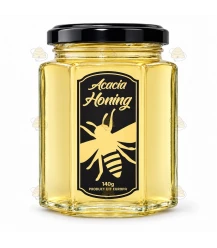
Acacia honey 140 g
€ 5,25 In stock and available for immediate delivery.A jar of delicious acacia honey. Acacia honey is one of the few honeys that almost never crystallizes. It’s a light honey that stays liquid. The taste is pleasantly sweet—a delicious honey with a relatively neutral flavor. Let yourself be surprised by this honey, guaranteed different from supermarket honey. One jar contains 140 grams of acacia honey....View more -
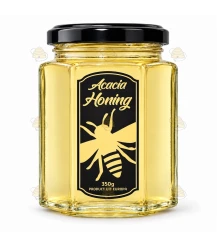
Acacia honey 350 g
€ 8,95 In stock and available for immediate delivery.Jar of delicious acacia honey. Acacia honey is one of the few types of honey that almost never crystallizes. It’s a beautifully light, very runny honey. The flavour is very sweet. A delicious honey with a relatively neutral flavour. Let this honey surprise you—guaranteed different from supermarket honey. One jar contains 350 g of acacia honey. Packed by...View more -
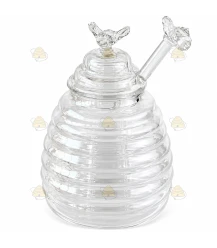
Small Glass Honey Jar
€ 10,25 In stock and available for immediate delivery.Clear glass jar with a sturdy glass honey dipper inside for serving honey. The jar is shaped like a beehive, with a bee on the lid. The jar holds about 250 g of honey. This honey jar is approximately 11 cm tall and 7.5 cm wide. The honey jar includes: Honey dipper with a bee at the tip Lid with a bee on top Glass jarView more -
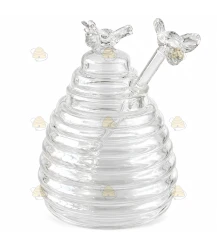
Large glass honey jar
€ 13,55 In stock and available for immediate delivery.Clear glass jar with a sturdy glass honey dipper for serving honey. The jar is shaped like a beehive with a bee on the lid. The jar holds about 500 g of honey. This honey jar is approximately 15 cm tall and 9.5 cm wide. The honey jar consists of: Honey dipper with a little bee at the tip Lid with a bee on top Glass jarView more -
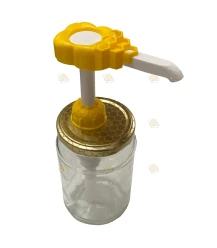
Honey dispenser pump for honey jar (63 mm)
€ 5,10 In stock and available for immediate delivery.Honey dispensing pump with lid for a honey jar with a 63 mm lid size. With this dispensing pump you can easily pump honey from your jar. The lid fits our glass jars: 450 g and 350 g round, and 350 g hexagonal. You can cut the plastic extension tube to length yourself. Note: supplied without honey jar.View more -
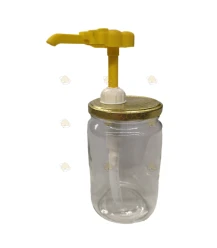
Honey jar pump (82 mm)
€ 5,95 In StockHoney dispensing pump with lid for a honey jar with 82 mm lid size. With this dispensing pump you can easily pump honey from your honey jar. The lid fits our glass [product id=6198]750 g honey jars[/product] with 82 mm lid size. The plastic extension tube can be cut to size if the tube is too long. Note: supplied without honey jar.View more -
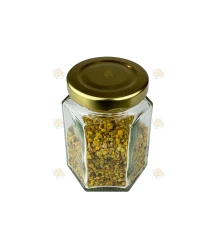
Pollen (European) 50 grams
€ 3,25 In stock and available for immediate delivery.Jar with 50 g bee pollen. Bees collect pollen from flowers, add enzymes and some nectar, and form pellets that they stick to their hind legs for transport; these pellets are called bee pollen. Bees collect pollen as a protein source. This bee pollen is about 35% protein. Besides protein, it also contains carbohydrates, fats, and many minerals (potassium,...View more -
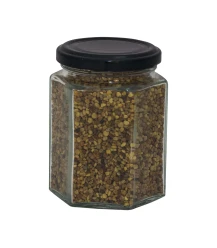
Pollen (European) 160 grams
€ 7,65 In stock and available for immediate delivery.Jar with 160 grams of pollen. Bees collect pollen from flowers; they add enzymes and a little nectar and form pellets that they stick to their hind legs for transport; these pellets are called pollen. Bees collect pollen as a protein source. This pollen is about 35% protein. Besides protein they also contain, carbohydrates, fats and many minerals...View more -
Bee bread 50 grams
€ 9,95 In stock and available for immediate delivery.Jar with 50 g of bee bread. Bee bread is a stored form of pollen in the beehive. The bees pack the pollen into the honeycomb and mix it with droplets of nectar. This forms hexagonal pellets that become slightly acidic and are thus preserved by the bees. Bee bread is packed with vitamins and is a good source of protein. It also contains carbohydrates, fats...View more -
Bee bread 150 g
€ 26,95 In stock and available for immediate delivery.150 g jar of bee bread. Bee bread is a stored form of pollen in the beehive. The bees pack the pollen into the honeycomb and mix it with drops of nectar. This forms hexagonal pellets that lightly acidify and are thereby preserved by the bees. Bee bread is packed with vitamins and is a good source of protein. It also contains, carbohydrates, fats and many...View more -
Honey syrup 70 cl
€ 14,20 In StockA bottle of delicious Monin honey syrup with a signature floral honey flavor. This syrup is perfect for mixing with tea, coffee drinks, lemonades and cocktails, and it also dissolves in cold water. It is specially formulated to dissolve instantly in both hot and cold drinks. Contents: 70 cl syrup.View more -
Small glass honey jar and 350 g honey
€ 16,50 This product is ordered, delivery time is approximately 14 days.Package consisting of:* [product id=2267] a small glass honey jar [/product] and* [product id=1500] 350 g delicious Zeeland autumn blossom honey [/product].A lovely package to treat yourself or someone else. The honey in this package is Zeeland, Brabant or Dutch blossom honey.View more -
Blossom honey 140 g
€ 2,45 € 3,25 In stock and available for immediate delivery.Jar of delicious wildflower honey. This wildflower honey has an aromatic, mild flavor. Discover the difference—this honey is nothing like supermarket honey. Each jar contains 140 g of wildflower honey. Packed by the beekeeper; sourced from the forests of Southeast Europe.View more

Showing 1 - 13 of 13 items
What types of honey are there, really?
Strictly speaking, there’s only one kind of honey, and that’s blossom honey. And yet that’s not entirely true. Keep reading and we’ll explain why. Blossom honey is often subdivided into many other varieties. A small selection of common types: acacia honey, rapeseed (canola) honey, mountain honey, balsam honey, and clover honey. But there’s another small difference. When people talk about forest honey or pine honey, this can be a honey produced by bees from aphids. How does that work? Aphids excrete plant sap—a sweet substance that bees lick or suck up. They take it back to the colony and it eventually becomes honey. This isn’t nectar from a flower collected by the honey bee, but rather sugary exudate from tree sap (honeydew). And therefore not blossom honey. It may still be called honey. Incidentally, Dutch organic honey is very hard to find, especially in the Netherlands. This is because there is a lot of pollution from roads that run alongside nature reserves. There are rules stating that beehives must always be 5 km from the road. And that is almost impossible in the Netherlands. The beekeeper must also use different beekeeping practices. This makes it a bit more difficult, but it’s perfectly doable. A local beekeeper can tell you why they do or don’t have organic honey.
Honey direct from the beekeeper!
Honey direct from the beekeeper is essentially fresh honey, also called raw honey. It’s 100% natural. Sometimes you’ll hear about cold‑extracted or warm‑extracted honey, but in practice honey is almost always cold‑extracted, because honey straight from the hive is already slightly warm from the bees themselves. After removing the frames from the hive, the honey is usually extracted right away and, after extraction, the honey is stored in a settling tank to rest briefly. After this, the jars are filled. You can then say the honey is unprocessed. Of course, the beekeeper may strain the honey once more, but that is very different from filtering under high pressure and heating, as happens in a large processing plant. A beekeeper’s strainers are comparatively coarse, so many beneficial components remain in the honey. Looking at what’s in honey, we’re talking about vitamins, minerals, and natural sugars.
Honey crystallization
Honey crystallizes naturally. This is a natural process that can be somewhat accelerated by tiny particles, such as pollen, present in the honey. These are very healthy to eat and contain various minerals, proteins, and vitamins. If the honey has crystallized, you can warm it to a maximum of 45°C. This ensures the honey does not lose quality and retains all its properties. If you heat honey above 45°C, especially for a longer time, the quality deteriorates quickly. You can warm honey to 45°C, for example by placing the jar in 45°C warm water or in an oven at 45°C for a short time. It will then become liquid again and be easy to use. Of course, you can also eat crystallized honey just as it is; it simply tastes different due to its changed texture. Avoid using the microwave to prevent the natural enzymes in honey from being destroyed.
Where should I buy honey?
The best place to buy honey is locally, or from a specialist shop. Locally, you can often buy it from a beekeeper with a sign at the door, or you can buy it from us, at a shop that specializes in honey. That way you’re sure to get quality honey at a fair price. The flavor of honey depends on the region it comes from. Every region has its own character. As long as the honey comes from Europe, you can still speak of ‘local,’ knowing that many supermarkets source honey from South America or even China, where quality is sometimes lower because the honey has spent a long time in drums during transport and storage, sometimes even in heat.
Health benefits of honey
Honey has been renowned for its unique health benefits for centuries. This natural sweetener, derived directly from the nectar of flowers and trees, is not only a delicious addition to our diet but also offers numerous health benefits. Honey is an excellent source of natural energy. The unique combination of natural sugars such as glucose and fructose provides a quick energy boost. This makes honey an ideal snack for athletes or a quick pick‑me‑up during the day. Furthermore, honey is known for other properties, although I’m not giving scientific advice here with respect to claims. Below I’ll give an idea of what is said about honey and presumed health properties.
Antioxidants: Raw honey is rich in important antioxidants, including organic acids and phenolic compounds such as flavonoids. Antioxidants help combat free radicals in the body, which may contribute to reducing the risk of chronic diseases such as heart disease and cancer.
Digestive support: Honey can aid digestion. It has prebiotic properties, meaning it stimulates the growth of beneficial bacteria in the gut. This can help improve overall digestion and reduce issues such as bloating and constipation.
Natural cough soother: Honey is often used as a natural remedy for coughs. Its thicker consistency helps soothe the throat and reduce irritation. Studies have shown that honey can be as effective as some commercial cough suppressants. But we also sell propolis, another product from the hive. This may work even better against coughs and is also available as cough syrup.
Antibacterial and antifungal properties: Honey has natural antibacterial and antifungal properties. This is largely due to the presence of hydrogen peroxide and its high acidity. These properties make honey not only useful for wound healing, but also for fighting infections.
Skincare: Thanks to its anti‑inflammatory and antibacterial properties, honey is also a popular ingredient in natural skincare products. It can help with skin conditions such as acne and eczema and contributes to a healthy, radiant complexion.
Relief for seasonal allergies: Some people find relief from seasonal allergies by consuming local honey. The idea is that by consuming honey that contains local pollen, the body can get used to these allergens, which may reduce hay fever symptoms. To achieve this, there is also another option: regularly eating a tiny amount of pollen. It’s best to do this a few months before allergy season begins and symptoms start to appear.
It’s important to remember that although honey offers many health benefits, it’s still a sugar‑rich substance. Moderate consumption is therefore essential, especially for people who need to monitor their sugar intake.
How should I store honey?
Store honey in a glass jar with a tight seal. This prevents the honey from absorbing moisture. Honey is hygroscopic, which means it absorbs moisture, and you don’t want that. It should stay as dry as possible to preserve shelf life and it won’t absorb foreign odors, for example from the kitchen. For the same reason, because it shouldn’t be heated, it also shouldn’t be kept warm; so store honey preferably cool in a cupboard, out of direct sunlight. But don’t put honey in the refrigerator, because it can crystallize faster. Honey doesn’t spoil quickly and can keep for years if stored correctly. The flavor and quality are best preserved if you follow these tips.